.png)
Introducing AEA Learning Library, an Educational Video Series for Recording Engineers
Led by Berklee College of Music professor John Escobar, the series explores recording techniques and critical listening in the studio
Pasadena, California, February 17, 2026 — AEA kicks off AEA Learning Library, an educational video series centered on real-world studio practice and in-session recording workflows. Led by producer, engineer, and Berklee College of Music professor John Escobar, the series offers an inside look at how recording decisions evolve in real time, shaped by the music, musicians, and recording space.

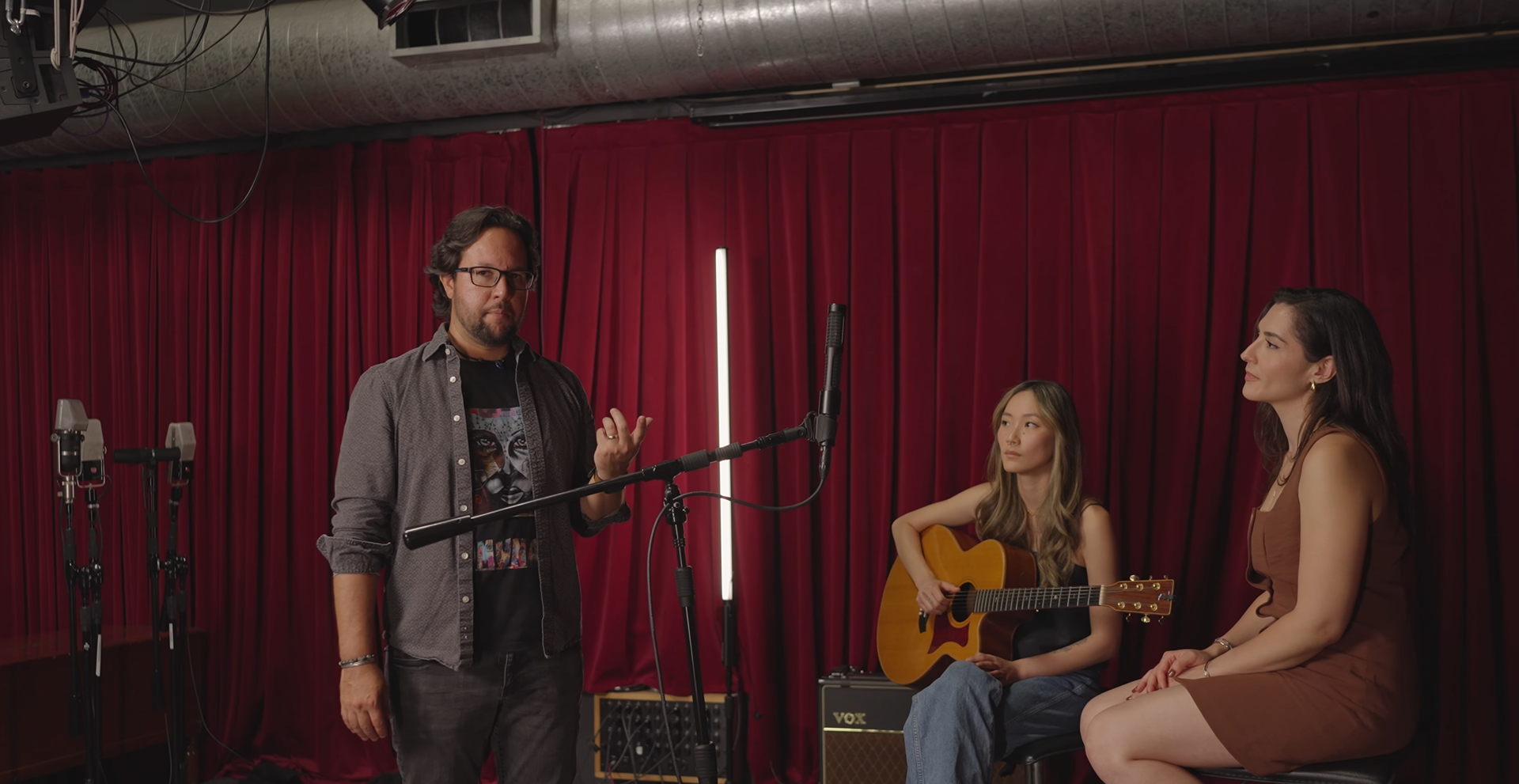
Across the first episodes of AEA Learning Library, Escobar walks through a range of recording scenarios focused on acoustic music, singer-songwriters, and small ensembles. Topics include mono and stereo microphone techniques, microphone placement, managing bleed and phase, and using polar patterns and null points to shape separation and balance. Rather than presenting fixed rules, the series emphasizes listening closely and making adjustments based on what the music and performers are actually doing in the room.
Filmed in Spanish and developed with Spanish-speaking engineers and producers in mind, the opening installment of AEA Learning Library places ribbon microphones at the center of the educational process. Rather than treating ribbons as niche or specialty tools, Escobar demonstrates how AEA ribbon microphones can be used as primary recording tools in everyday studio situations, reinforcing their versatility across vocals, acoustic instruments, and ensemble recording.
Each episode is built around real musical performances recorded in the studio, with musicians playing complete songs before Escobar breaks down the recording approach. Viewers hear how different microphone configurations affect tone, image, and clarity, and follow along as Escobar listens back, evaluates results, and refines the setup in real time. The format mirrors the natural flow of an actual session, highlighting how recording decisions often evolve through experimentation rather than presets.
.png)
For Escobar, the goal of the Learning Library is not only to demonstrate technique but to make the thought process behind recording decisions more transparent. By verbalizing what he’s listening for and why certain choices are made, he hopes to encourage engineers to trust their ears and remain flexible in the studio.
“I wanted the videos to feel organic and honest to how recording actually happens,” Escobar says. “It’s about listening, reacting, and adjusting as the session unfolds, rather than chasing a single ‘correct’ setup.”
The decision to present the Learning Library in Spanish reflects a broader view of who professional recording education is for and how it can be shared. Much of the available instructional content in audio production assumes English fluency and access to formal training environments, a reality Escobar has seen firsthand through years of teaching. Drawing on that experience, the series was designed to meet Spanish-speaking engineers and producers where they are, without diluting the depth or rigor of the material.
“Doing this series in Spanish is my way of bringing a bit of Berklee to the Spanish-speaking audio community and giving them something created specifically for them,” Escobar says.
Episodes from AEA Learning Library are available now on AEA’s YouTube channel.
To learn more, visit aearibbonmics.com.
About AEA Ribbon Mics
Founded in 1964, AEA began as a record label and mobile recording studio before expanding into microphone repairs and full-scale manufacturing. In 1998, AEA introduced the R44C — an evolution of the iconic RCA 44BX — and has since developed a full range of microphones and preamps inspired by classic designs and built to modern standards. With a commitment to ultra-low noise circuitry, musical sound, and expert craftsmanship, AEA continues to push ribbon technology forward while honoring its legacy. All AEA products are proudly handcrafted in Pasadena, California.
Learn more at aearibbonmics.com

Hunter Williams
.png)
.png)
.png)
.png)
.png)
.png)