Bureau B to Reissue Cluster's Pivitol Zuckerzeit Album on August 7th
1974 album represents a clear turning point in Cluster's body of work, with shorter formats and more defined rhythmic framework
Hamburg, Germany, June 10, 2026 — Bureau B announces a re-issue of Cluster's pivitol album Zuckerzeit, to be released by Bureau B in CD and vinyl formats on August 7th. This standard edition follows the previous limited anniversary release, making a key recording in Cluster’s catalogue available to the wider public.
Originally released in 1974, Zuckerzeit marks a clear turning point in Cluster’s work, introducing shorter formats and a more defined rhythmic framework. The increased use of drum machines and structured sequencing sets it apart from the duo’s earlier, more diffuse recordings, while maintaining a focus on texture and tone. Developed in close proximity to Michael Rother and under increasingly independent production conditions, the album establishes a more direct and accessible approach without simplifying its underlying ideas.

The 'sugar era'
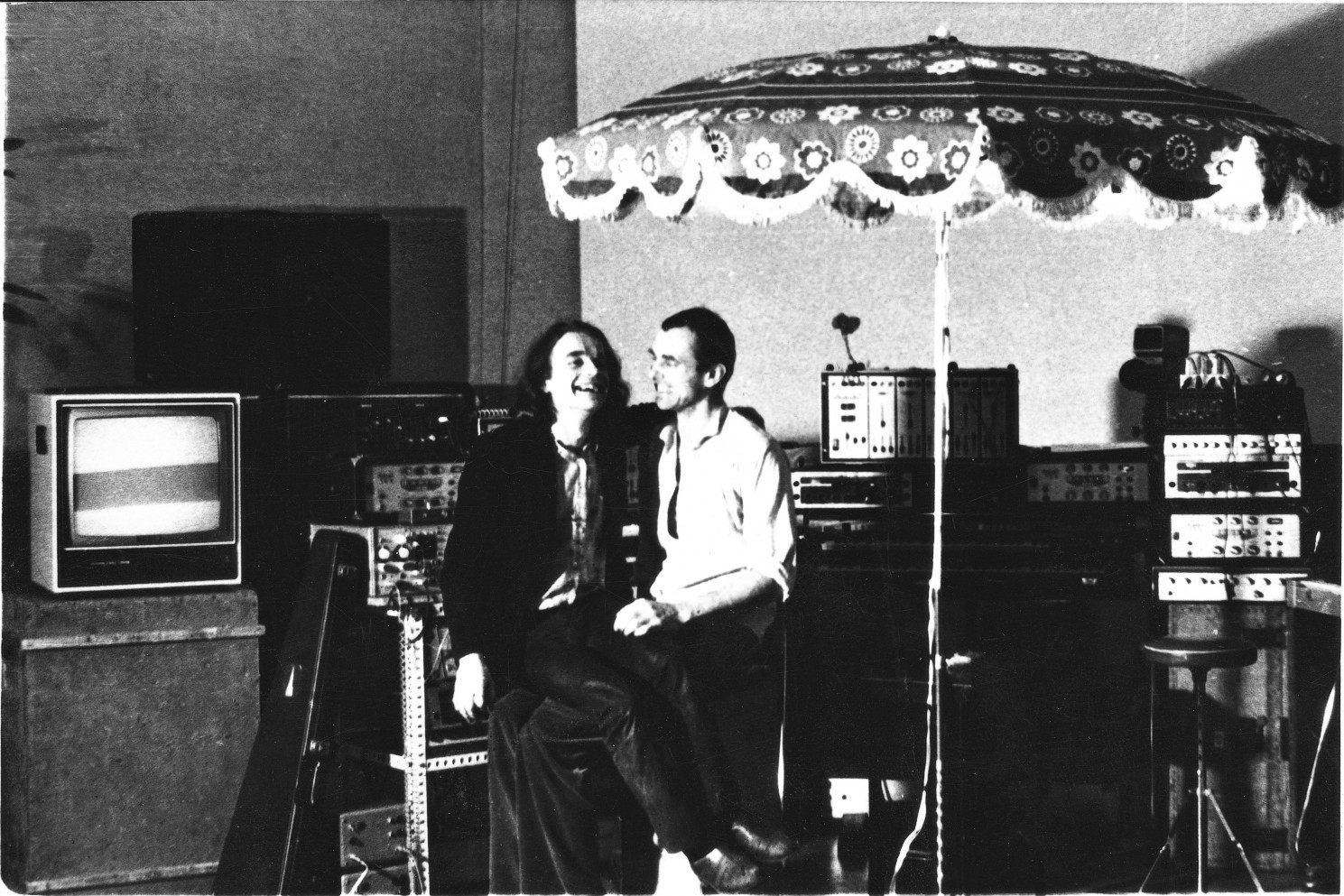
In 1974, Cluster entered the sugar era. This doesn’t mean that they had finally arrived in their promised land, but they had simply moved from Berlin to the country, to a small place called Forst on the river Weser. Many a thing had changed for band members Moebius and Roedelius since Cluster II: They had moved from boisterous Berlin to this calm rural village, they had founded the band Harmonia, had set up their own studio and had bought new equipment. As a result of this and many other things, new impulses were noticeably spurring the evolution of their music. The album Zuckerzeit (“sugar era”) launched a revolution for Cluster.
Strictly speaking, Zuckerzeit is not really an album by Cluster. More precisely, the LP contains two mini solo albums by Moebius and Roedelius. Those who were familiar with the stylistic peculiarities of the two musicians could easily relate the solo pieces to either one of them. As Roedelius and Moebius had not yet released any solo works by the time, it was actually not possible to draw up any comparisons yet. What could be clearly heard, though, was that there were two different musical attitudes to be found on one album. One thing they did have in common was the consistent use of the analogue rhythm machine. This was something new for Cluster inasmuch as on their last album Cluster II, they had still focussed on completely different methods that were to give structure to the pieces. Zuckerzeit, on the contrary, is designed in a clearly rhythmical way: a rhythm machine, triggered synths and harmonic patterns played by hand inspired life and imagination on the melody lines: This was different as well. Once again, Roedelius and Moebius took on work in such a remarkably light-hearted and down-to-earth manner as was typical of Cluster. Zuckerzeit is light and cheerful, freed from the Germanic gravity and the mystic incense fumes that were so fashionable at the time. Cluster man aged to keep both feet on the ground without becoming plain or even sterile.

Roedelius and Moebius at the core
The friendliness of the music is clearly due to the two personalities of Roedelius and Moebius; its down-to-earth character possibly comes from Michael Rother, the album’s co-producer. Michael Rother had already performed with Kraftwerk and had founded the band NEU! together with Klaus Dinger before moving to idyllic Forst himself in 1973. The same year, the band Harmonia (Roedelius, Moebius, Rother) was born.
By the time Zuckerzeit was recorded, Cluster could finally call themselves lucky owners of their own recording equipment consisting of a multi-track recording machine, a mixer and peripherals. This gave them the possibility to develop and record their Zuckerzeit material without precipitating things or having to depend on other people. So they did everything on their own except for the finishing which took place in the studio of Conny Plank, the sonic magician of their early days, something which vitally accounted for a successful outcome by the way. One has to admit that technical equipment at Forst was not quite up to the standards even of that time. Moebius and Roedelius, however, knew how to make use of the devices they had in such a skilful way that it almost seemed ob solete to consider working in large and professional studios in the future. So, many years were yet to go by until Cluster set foot in a studio other than their own again, this time not only to do the finishing but also the recordings.
When comparing Zuckerzeit to the works of other electronic combos produced at the same time, it is first of all the shortness of the tracks that seems most striking (2’20” to 6’10”). Those who loved listening closely and who were fond of sophisticated, varied and elaborate music could not be more satisfied. Cluster took their time working on the album and not least that they could rely on the ideas of their co-producer Michael Rother—all this taken together gave way to the creation of electronic miniatures that sounded as extraordinary in the 1970s as they still do today. Even thirty years after its first release, Zuckerzeit might easily figure as a reverberating chapter in the latest edition of the imaginary handbook “The Golden Rules of Electronic Music”.
For more information on this and other Bureau B releases, please visit https://www.bureau-b.com/releases.
About Bureau B
Bureau B is platform for exciting varieties of electronic, free-spirited music. The spectrum ranges from pop to avant-garde, and the label has amassed an impressive catalogue of reissues and new productions in recent years, including classics from the genre of electronic music in the 1970s and early 1980s popularly classified as Krautrock (Cluster, Roedelius, Moebius, Plank, Schnitzler), alongside new recordings by such formative artists as Faust, Kreidler, Roedelius, Tietchens, Moebius, to name just a few. Bureau B is based in Hamburg, Germany.

Jeff Touzeau